
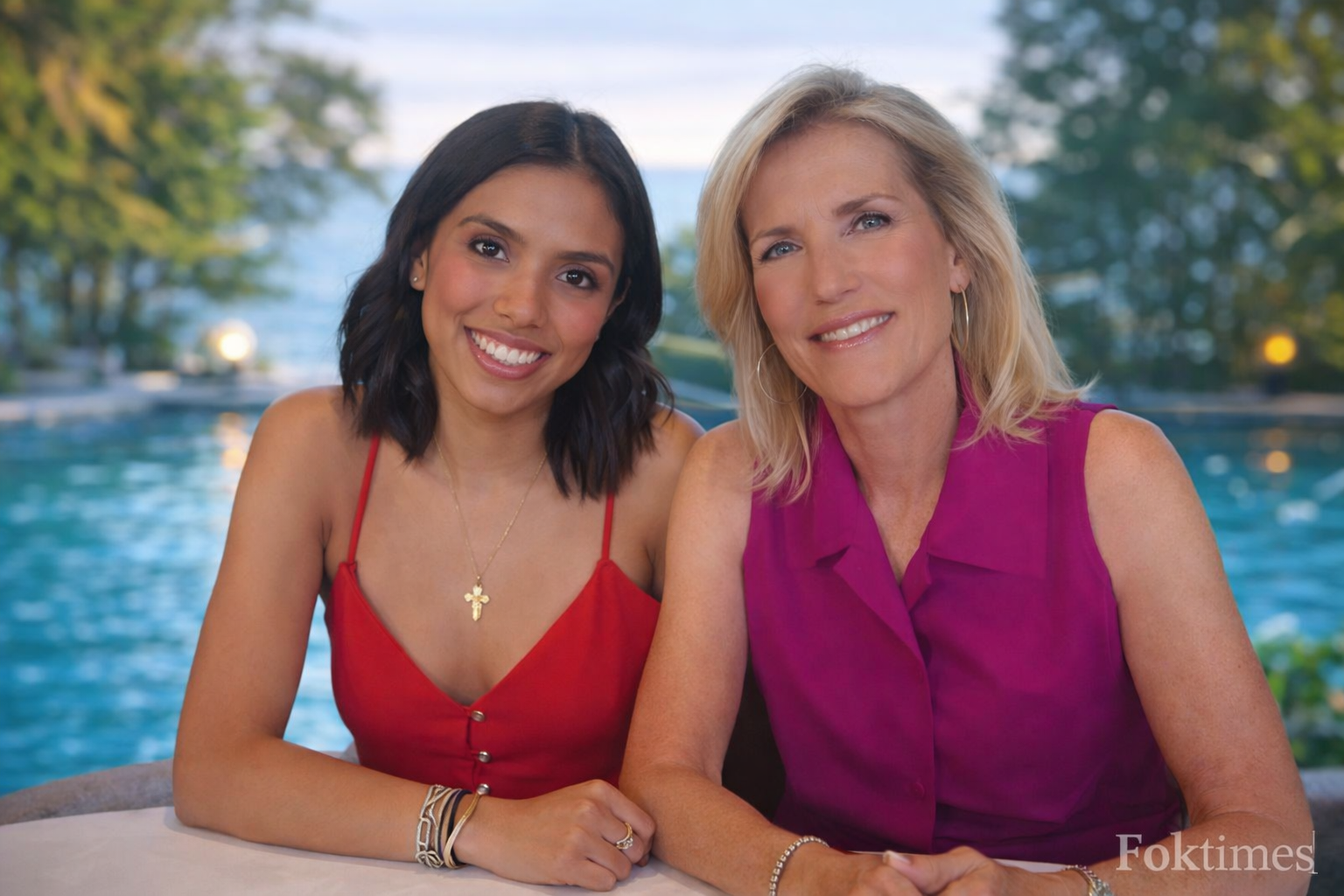
Maria Caroline Ingraham is a name that often sparks curiosity. Yet unlike celebrities, politicians, or public influencers, she has not built a public persona of her own. Instead, public interest in her life stems largely from her connection to one of America’s most recognizable media figures, Laura Ingraham. In a digital era where information spreads instantly and personal details can become headlines overnight, Maria Caroline Ingraham represents something increasingly rare: a private individual growing up within a highly visible public environment.
This biography-style profile explores what is publicly known about Maria Caroline Ingraham, the context of her adoption, and the broader themes her story touches—family, privacy, identity, and life under media attention.
Early Life and Adoption
Maria Caroline Ingraham was adopted from Guatemala by Laura Ingraham. Her adoption has been referenced publicly by her mother in interviews and speeches, where she described the emotional journey of bringing her daughter home. International adoption in the early 2000s was more common than it is today, and Guatemala was among the countries from which American families adopted children during that period.
Adoption stories often carry layers of complexity. They include legal processes, cultural transitions, and emotional adjustments for both the child and the parent. For Maria Caroline, her earliest years were shaped by a life transition that moved her across borders and into a new family environment in the United States.
Although specific personal details about her early childhood are not publicly documented—and rightly so—the broader context of international adoption during that time reveals how structured and demanding the process could be. Families underwent background checks, home studies, and extensive paperwork. For many parents, the journey required patience, resilience, and deep commitment.
Growing Up in a High-Profile Household
Growing up as the child of a nationally known television host brings a unique set of circumstances. Public figures often live under scrutiny, and their families may experience attention simply by association. Yet not every child of a media personality steps into the spotlight. In fact, many parents in public life work deliberately to protect their children’s privacy.
Maria Caroline Ingraham has largely remained outside the public narrative. Unlike children of celebrities who build social media followings or entertainment careers, she has not cultivated a public presence. This distinction is important. It reflects a boundary between public and private life that is increasingly difficult to maintain in the digital age.
For children in prominent families, normal milestones—school events, sports activities, friendships—often happen away from cameras. Parents who live in the spotlight frequently face the challenge of balancing transparency with protection. The choice to keep details private is not secrecy; it is parenting.
Family and Siblings
Maria Caroline Ingraham is part of a family that includes adopted siblings. Laura Ingraham has spoken publicly about adoption as a meaningful personal journey. Building a family through adoption requires dedication, empathy, and an openness to cross-cultural experiences.
Sibling relationships in adoptive families can carry special bonds. Shared experiences of transition and adjustment often create strong emotional connections. While specific details about Maria Caroline’s daily life are appropriately private, it is clear that she grew up in a household that valued family structure and stability.
Adoptive families frequently emphasize identity, heritage, and belonging. For internationally adopted children, questions about cultural roots can become part of personal development. Many families honor their child’s country of origin through traditions, language exposure, or educational exploration.
The Public Curiosity Factor
Why does Maria Caroline Ingraham’s name appear in search engines so frequently? The answer lies less in her own actions and more in the nature of modern information consumption. Today, when a public figure references a family member, the internet often responds with immediate curiosity. Search traffic increases, biography-style pages multiply, and speculation sometimes fills the gaps left by limited public information.
This phenomenon reflects a broader shift in media culture. Audiences have grown accustomed to constant access. Social platforms encourage personal storytelling, and many public figures share family moments openly. However, not every family chooses that path.
In the case of Maria Caroline Ingraham, the limited amount of verified information suggests a deliberate effort to maintain privacy. That choice aligns with evolving conversations about children’s digital footprints. Experts increasingly warn about overexposure of minors online. Once information is published, it can remain searchable indefinitely.
International Adoption: A Changing Landscape
Maria Caroline’s adoption occurred during a period when international adoption was more common among American families. Since then, global adoption patterns have shifted significantly. Regulatory reforms, international agreements, and country-specific policy changes have reduced the number of intercountry adoptions.
These changes stem from efforts to protect children, ensure ethical practices, and strengthen domestic child welfare systems within sending countries. The goal has been to prevent exploitation while prioritizing family preservation whenever possible.
For families who adopted internationally during earlier years, the experience often included navigating evolving regulations. Adoption agencies, government authorities, and international organizations collaborated to ensure compliance with safeguards.
Although the global landscape has transformed, the personal dimension of adoption remains timeless. It centers on belonging, opportunity, and the creation of permanent family bonds.
Life Beyond Headlines
One of the most important aspects of understanding Maria Caroline Ingraham’s story is recognizing what it is not. It is not a celebrity narrative filled with public appearances or personal interviews. It is not a social media-driven personal brand. Instead, it represents a life unfolding outside public performance.
There is something quietly powerful about that. In an era where visibility is often equated with significance, choosing—or being allowed—to live privately is meaningful. Privacy allows for growth without commentary. It allows mistakes without magnification. It creates space for identity to develop organically.
Children connected to public figures often face assumptions. People may project expectations onto them based on their parent’s career. Yet each person’s path is individual. Interests, ambitions, and values form through personal experiences rather than public associations.
Identity and Cultural Heritage
For internationally adopted children, identity can include multiple layers. There is the culture of birth and the culture of upbringing. There are questions of heritage, language, and belonging. Many adoptees navigate these themes thoughtfully as they grow older.
Families sometimes support this journey by encouraging education about cultural history or travel experiences connected to the child’s country of origin. While there is no public documentation detailing Maria Caroline Ingraham’s personal reflections, adoption experts often emphasize that identity formation is a gradual and evolving process.
Psychologists note that adolescence can be a particularly reflective stage for adoptees. Questions about origin, belonging, and narrative often emerge naturally. Healthy family dialogue and support systems can provide stability during this time.
Media, Ethics, and Boundaries
The digital age has complicated the boundaries between public interest and personal privacy. When a child is connected to a public figure, ethical questions arise. What constitutes fair coverage? Where does curiosity become intrusion?
Reputable journalism traditionally distinguishes between public officials and private citizens. Children, especially those who have not chosen public roles, fall firmly into the latter category. Responsible reporting avoids speculative details and respects personal boundaries.
Maria Caroline Ingraham’s limited public profile may serve as a reminder that restraint can be a virtue in media culture. Not every question requires an answer. Not every search requires a biography filled with conjecture.
Looking Ahead
As Maria Caroline Ingraham continues to grow and shape her own future, her path remains her own. She may choose a public-facing career, or she may prefer a life away from headlines. The defining element is choice.
The children of public figures sometimes step into visibility as adults, defining themselves through professional achievements or advocacy. Others pursue careers that remain largely private. There is no predetermined script.
What matters most is the foundation upon which adulthood is built: family support, education, resilience, and personal values. Those qualities develop far from search engine trends.
Conclusion
Maria Caroline Ingraham’s biography is, in many ways, a story about balance. It is about the intersection of adoption, family, and public life. It reflects a childhood shaped by international transition and upbringing within a high-profile household, yet protected from constant public exposure.
In an age when personal information often spreads without boundaries, her largely private presence stands out. It reminds us that not every life connected to fame must become a public narrative. Some stories are meaningful precisely because they unfold quietly.
Ultimately, Maria Caroline Ingraham represents more than a searchable name. She represents the enduring importance of family, identity, and the right to grow beyond the glare of public attention.