
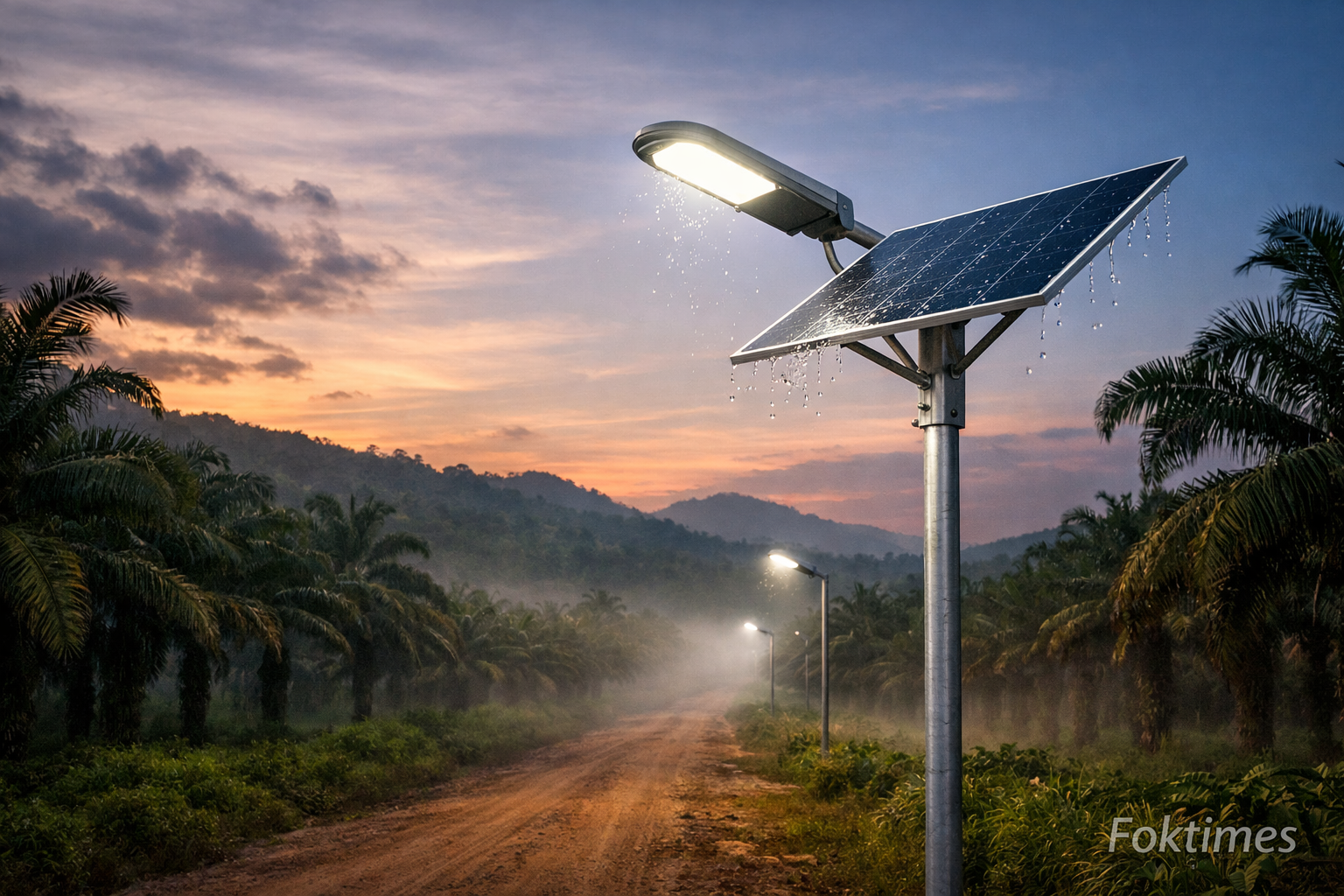
Across many tropical regions of the world, palm oil plantations stretch across thousands of hectares. These areas include roads, worker housing, processing facilities, and transportation routes that operate around the clock. Reliable lighting is essential for safety, productivity, and community wellbeing. However, maintaining lighting systems in remote agricultural environments can be difficult due to dust, humidity, and natural debris.
This is where the concept of a self cleaning street light palm oil solution becomes important. These lighting systems are designed to perform efficiently in plantation environments where traditional lights often struggle. By combining modern LED technology, solar power, and self-cleaning surfaces, these lights reduce maintenance needs and provide dependable illumination even in demanding outdoor conditions.
Understanding Self Cleaning Street Light Technology
Self-cleaning street lights are built with special materials and surface technologies that prevent dirt, dust, and organic residue from accumulating on critical components such as solar panels and light lenses. In agricultural environments like palm oil plantations, airborne particles and plant debris can quickly build up on surfaces. Over time, this reduces lighting efficiency and increases maintenance requirements.
Modern self-cleaning systems address this issue by using coatings that allow water to wash away dirt when it rains. These coatings may be hydrophobic, meaning they repel water and allow droplets to carry dust away from the surface. In other designs, the surface spreads water evenly so it can rinse the panel or lens naturally.
This natural cleaning process keeps the light output stable for longer periods and ensures that solar panels continue receiving sunlight without heavy dust accumulation. As a result, the lighting system remains reliable even when maintenance visits are infrequent.
Why Palm Oil Regions Need Specialized Street Lighting
Palm oil plantation environments are very different from typical urban settings. Roads in these areas often pass through dense vegetation and operate in high humidity conditions. Dust from vehicles, soil particles, and plant fibers can settle on equipment quickly. Additionally, transportation activities often begin before sunrise and continue late into the night.
Because of these conditions, street lighting must be designed with durability and reliability in mind. Workers may rely on this lighting while transporting fruit bunches, operating machinery, or traveling between plantation facilities.
Self cleaning street light palm oil systems are particularly useful in these environments because they reduce the frequency of manual cleaning and maintenance. This saves operational costs and ensures consistent illumination for roads and work areas that may be located far from service centers.
Solar Power and Energy Efficiency in Plantation Lighting
Many self-cleaning street lights used in plantation regions operate using solar power. Solar LED lighting has become a practical option for rural infrastructure because it does not require extensive grid connections. Instead, each pole can generate and store its own electricity through integrated solar panels and batteries.
Solar-powered street lights provide several advantages for palm oil estates. First, they reduce electricity costs by relying on renewable energy. Second, they simplify installation in areas where electrical infrastructure may not exist. Third, they operate independently, meaning that a power outage in one area will not affect other lighting units.
When combined with self-cleaning technology, solar panels remain more efficient because dust buildup is minimized. This helps maintain energy production and extends the lifespan of the lighting system.
Design Features of Modern Self Cleaning Street Lights
The design of modern self-cleaning street lights focuses on durability and efficiency. Manufacturers often use sealed LED modules that prevent moisture and insects from entering the lighting unit. High-quality aluminum housings protect internal components from corrosion and extreme weather conditions.
Another important feature is the angled placement of solar panels. By positioning panels at a suitable tilt, rainwater naturally flows across the surface and removes accumulated dust. Some designs also include protective glass coatings that reduce the adhesion of dirt particles.
Battery systems are also designed for reliability. Lithium batteries are commonly used because they offer long service life and stable performance in varying temperatures. Combined with intelligent controllers, these systems can adjust brightness levels during the night to conserve energy while still providing adequate illumination.
Benefits for Plantation Operations and Communities
Reliable lighting can significantly improve safety and efficiency in plantation environments. Well-lit roads help drivers navigate safely during nighttime transportation of harvested fruit. This reduces the risk of accidents and improves overall logistics operations.
Communities located near palm oil estates also benefit from improved lighting infrastructure. Workers traveling between residential areas and processing facilities feel safer when roads and pathways are illuminated.
Additionally, reduced maintenance requirements allow plantation operators to allocate resources more efficiently. Instead of frequent cleaning and repairs, maintenance teams can focus on other essential operational tasks.
The environmental benefits are also significant. Solar-powered lighting reduces reliance on fossil fuel electricity and contributes to lower carbon emissions. For companies seeking more sustainable practices, this approach aligns with modern environmental goals.
Innovation and Future Development
Technology in outdoor lighting continues to evolve rapidly. Researchers and manufacturers are exploring new materials that improve the self-cleaning capabilities of solar panels and glass surfaces. Nanotechnology coatings and advanced surface treatments are being developed to further reduce dust adhesion and maintain transparency over long periods.
Smart lighting systems are another area of innovation. Sensors and remote monitoring platforms allow operators to track performance and receive alerts if a light stops working. This reduces downtime and helps maintenance teams respond quickly to any technical issues.
In the future, self cleaning street light palm oil systems may also integrate additional smart city features such as environmental sensors, wireless connectivity, and automated brightness adjustment based on traffic levels.
Conclusion
Lighting infrastructure plays a crucial role in the daily operations of palm oil plantations and the surrounding communities. Traditional lighting systems often struggle in agricultural environments where dust, humidity, and debris accumulate quickly. Self-cleaning street lights provide a practical solution by reducing maintenance requirements while maintaining reliable performance.
By combining solar power, durable materials, and innovative surface technology, self cleaning street light palm oil systems help improve safety, reduce operational costs, and support sustainable energy use in plantation regions. As technology continues to develop, these lighting solutions will likely become an essential component of modern agricultural infrastructure, offering dependable illumination for roads, workers, and communities long into the future.