
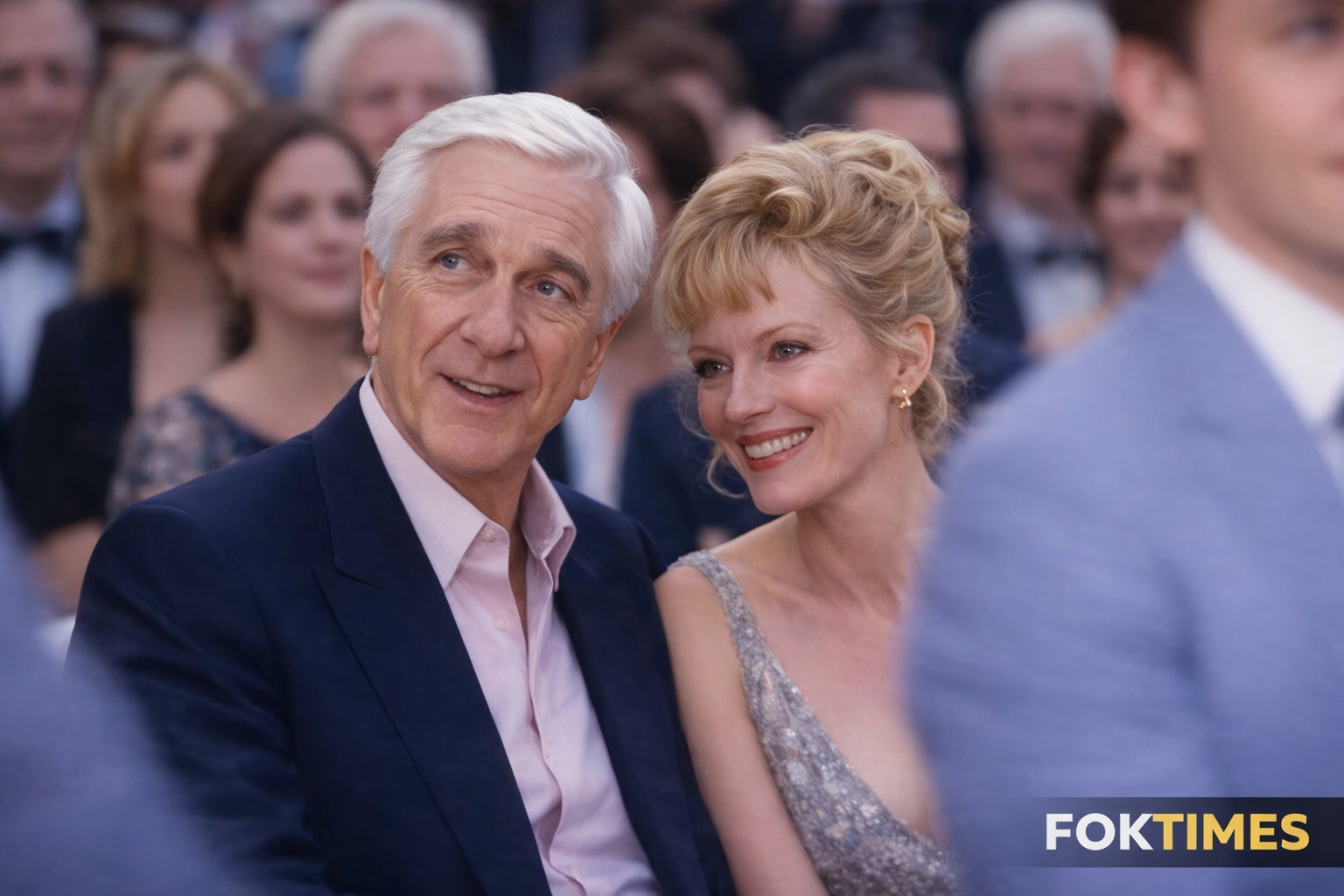
Alisande Ullman is a name that appears quietly in the history of classic Hollywood, most often mentioned in connection with legendary actor Leslie Nielsen. Yet reducing her identity to a single line in someone else’s biography does not do justice to the depth and dignity of a life lived largely outside public view. In an era when fame increasingly defines cultural relevance, Ullman’s story stands as a reminder that significance is not always measured in headlines.
While public records about her remain limited, what is known offers insight into a pivotal chapter of mid‑twentieth‑century Hollywood and the private family world behind a growing entertainment career. This biography explores the verified details of her life, the context of her marriage, and the broader cultural environment that shaped her years alongside one of television and film’s most recognizable faces.
Early Life and Background
Public documentation regarding Alisande Ullman’s early years is scarce. Unlike many figures linked to Hollywood, she did not cultivate a media presence, nor did she leave behind interviews, memoirs, or widely reported professional achievements. The absence of detailed records suggests a life rooted in privacy rather than performance.
In the mid‑twentieth century, it was common for spouses of actors to maintain domestic lives away from press coverage unless they themselves pursued entertainment careers. Ullman appears to have belonged to that quieter tradition. Her upbringing, education, and early ambitions remain largely unrecorded in mainstream archives, reinforcing the impression that she neither sought nor embraced public exposure.
Marriage to Leslie Nielsen
Alisande Ullman married Leslie Nielsen in 1958. At that time, Nielsen was establishing himself as a dependable dramatic actor in television and film. Though he would later become internationally celebrated for his comedic brilliance in films like Airplane! and The Naked Gun series, his early career focused heavily on serious roles.
The marriage lasted until 1973, marking fifteen years together during a transformative era in American entertainment. These years coincided with Nielsen’s steady professional growth. Television was rapidly expanding, studios were evolving, and the industry was navigating a shift from the old studio system to a more decentralized model of production.
For a spouse, such an environment demanded flexibility. Acting schedules were often unpredictable. Productions required travel. Public expectations could intrude into private life. While Ullman did not publicly comment on her experiences, it is reasonable to recognize that maintaining stability during such a period required resilience and adaptability.
Motherhood and Family Life
During their marriage, Ullman and Nielsen had two daughters, Maura and Thea. Motherhood formed a central part of Ullman’s life. Raising children while partnered with a working actor likely meant managing daily responsibilities with consistency and care.
The 1960s and early 1970s brought significant cultural change. Women’s roles in society were evolving, yet many families still relied on traditional domestic structures. Within that context, Ullman’s contribution to her household would have been substantial. Even when unseen by the public, such labor shapes the trajectory of families and careers alike.
Parenthood also introduces emotional dimensions that extend far beyond career narratives. While Nielsen’s professional milestones are well documented, Ullman’s influence lived within the family sphere. Her presence during those formative years contributed to the environment in which their daughters were raised.
The Hollywood Environment of the 1960s
Understanding Ullman’s life requires appreciating the cultural backdrop of her marriage. Hollywood in the late 1950s and 1960s was a place of transformation. Television was competing with cinema for audiences. Actors moved frequently between mediums. Public relations machinery shaped narratives around stars and their families.
Unlike today’s digital era, however, media exposure was more controlled. Tabloids existed, but they did not operate with the constant immediacy of modern social platforms. This environment allowed certain individuals, especially those not actively pursuing fame, to maintain relative anonymity.
Ullman appears to have done exactly that. She did not become a celebrity spouse in the contemporary sense. She did not leverage association into public branding. Instead, she remained largely outside the entertainment press.
Separation and Divorce
In 1973, Ullman and Nielsen divorced. Public documentation does not elaborate on the reasons, and responsible biography avoids speculation. Divorce during that era carried different social implications than it does today. By the early 1970s, divorce rates in the United States were rising, reflecting shifting cultural attitudes about marriage and individual autonomy.
For families, separation often meant recalibration. Co‑parenting arrangements, financial adjustments, and emotional transitions required strength from both parties. While Nielsen would go on to remarry, Ullman retreated further from public view after the divorce, reinforcing her commitment to privacy.
Life After Public Attention
Following the end of her marriage, Alisande Ullman’s public footprint became even smaller. There are no widely circulated interviews, business ventures, or media appearances tied to her name. In an age when personal reinvention often plays out in public, her silence stands out.
Silence, however, should not be mistaken for absence. Many individuals choose lives grounded in family, community, and personal fulfillment without seeking recognition. Ullman’s story illustrates how history often records public achievement while overlooking private continuity.
Legacy and Historical Perspective
Alisande Ullman’s legacy is intertwined with a particular chapter of Hollywood history. She was present during the foundational years of Leslie Nielsen’s long career. She was the mother of his children. She participated in the lived experience behind the professional persona.
Biographies of famous actors frequently compress marriages into dates. Yet relationships unfold in everyday rhythms. They involve shared decisions, mutual support, conflict, compromise, and growth. Even when public archives do not detail those dynamics, acknowledging their complexity honors the reality of human life.
In broader cultural analysis, Ullman represents a category of historical figures who exist at the margins of celebrity but at the center of personal narratives. Her name persists not because she sought fame but because she was part of a significant personal chapter in a well‑known life.
The Value of Privacy in a Public Age
In today’s culture, personal details circulate quickly. Social media platforms amplify curiosity. Public figures’ families often face scrutiny regardless of their own wishes. Against that backdrop, Ullman’s limited documentation feels almost protective.
Her story invites reflection on how society consumes biography. Do we measure importance solely by visibility, or can we recognize the weight of private contributions? The answer shapes how history remembers not only celebrities but also the individuals who stand beside them.
Conclusion
Alisande Ullman remains a quiet yet enduring presence in Hollywood history. Married to Leslie Nielsen from 1958 to 1973 and mother to their two daughters, she occupied a meaningful role during a transformative era in entertainment. Though public records reveal only fragments, those fragments are enough to establish her place in the narrative.
Her biography is not one of spotlight performances or media tours. Instead, it is a story of partnership, family, and discretion. In acknowledging her life, we also acknowledge the countless individuals whose influence unfolds beyond cameras and applause.
Ultimately, Alisande Ullman’s story reminds us that history is not composed solely of marquee names. It is built from relationships, shared years, and the quiet resilience of people who shape lives without seeking recognition. In that sense, her legacy is both subtle and significant.