
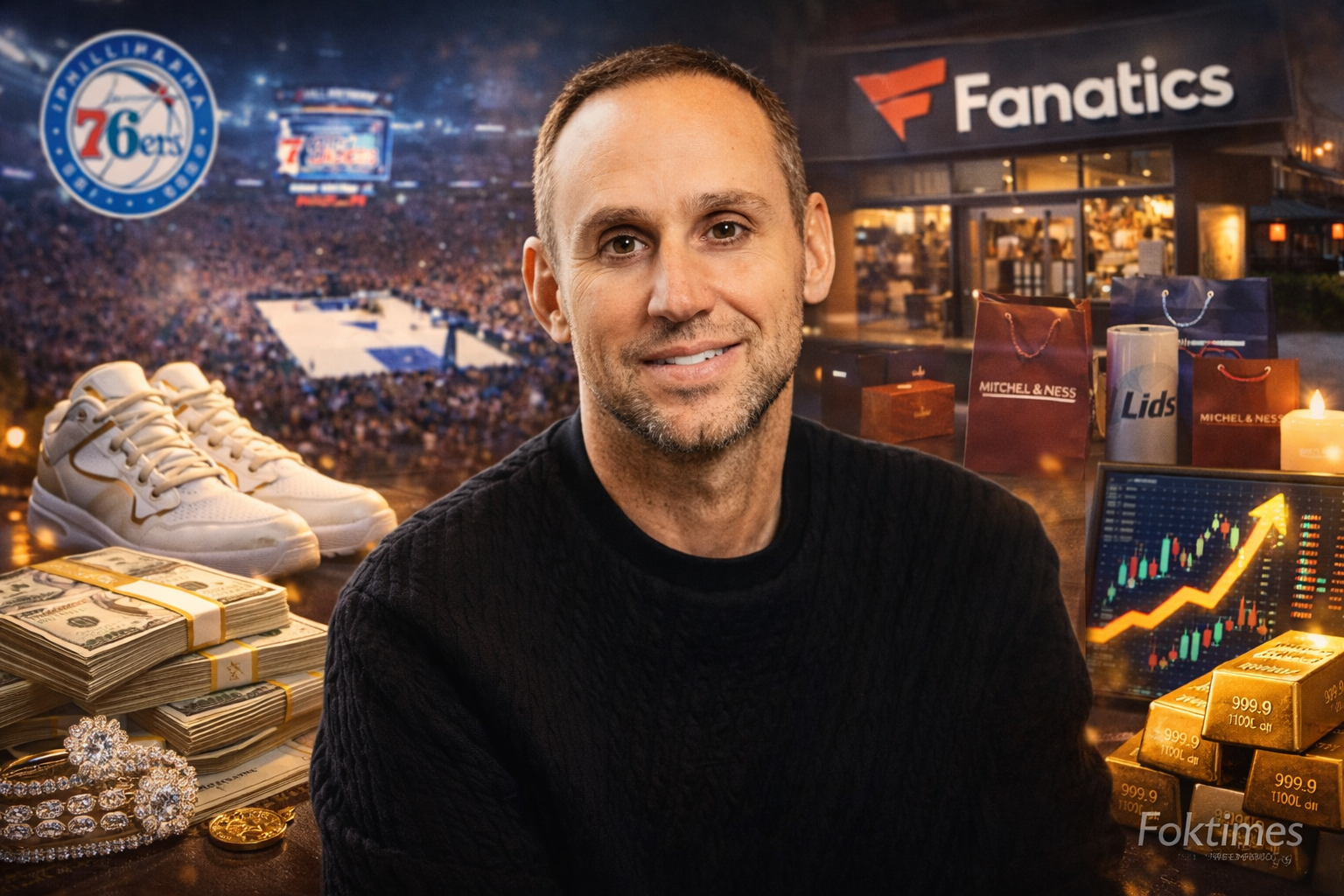
Michael Rubin is one of the most influential entrepreneurs in modern sports business. Known as the founder and CEO of Fanatics, Rubin has transformed the way fans buy sports merchandise and collectibles. Over the years, his relentless work ethic, sharp business instincts, and willingness to take risks have helped him build an extraordinary fortune. Today, Michael Rubin’s net worth is estimated in the billions, placing him among the most successful self-made entrepreneurs in the United States.
But Rubin’s journey to wealth was not built overnight. His story is one of determination, early entrepreneurship, and the ability to recognize opportunities before others. From running a ski equipment shop as a teenager to leading a multi-billion-dollar sports commerce empire, Rubin’s biography reflects the mindset of a founder who never stopped building.
Michael Rubin Net Worth in 2026
Michael Rubin’s net worth is estimated to be around several billion dollars, largely tied to his ownership stake in Fanatics and other ventures. Financial publications such as Forbes and Bloomberg have consistently ranked Rubin among the wealthiest entrepreneurs in the sports and e-commerce industries.
Much of his wealth comes from Fanatics, a company that has grown from a sports merchandise retailer into a global digital sports platform. The company has expanded into trading cards, collectibles, betting, and fan experiences, which has significantly increased its valuation over the past decade.
Because Fanatics is privately held, Rubin’s net worth can fluctuate depending on how analysts value the company in funding rounds or private share sales. However, what remains clear is that Fanatics is the primary engine behind his fortune.
Early Life and Entrepreneurial Beginnings
Michael Rubin was born and raised in Lafayette Hill, Pennsylvania, a suburb of Philadelphia. His father was a veterinarian, and his mother worked as a psychiatrist. Growing up in a supportive but disciplined household, Rubin developed an entrepreneurial mindset at an early age.
At just twelve years old, Rubin started a ski tuning business in his parents’ basement. He repaired and maintained ski equipment for local customers, gradually turning the hobby into a profitable venture. By the time he was fourteen, Rubin had opened a full ski shop.
Although the business eventually faced financial challenges, the experience taught Rubin valuable lessons about risk, cash flow, and persistence. Those lessons would shape his future approach to entrepreneurship.
Building GSI Commerce
Rubin’s first major breakthrough came with the creation of GSI Commerce, an e-commerce company that helped major retailers manage their online stores and logistics.
During the early days of internet retail, many brands struggled to build their own digital infrastructure. Rubin saw an opportunity to provide a full-service solution. GSI Commerce handled everything from website operations to order fulfillment for major brands.
The business grew rapidly as e-commerce expanded across the world. Companies that partnered with GSI gained access to technology and supply chain systems that would have been difficult to build independently.
Eventually, GSI Commerce became one of the largest e-commerce service providers in the United States.
The Billion-Dollar Sale to eBay
In 2011, Rubin made one of the most important moves of his career when eBay acquired GSI Commerce in a deal worth approximately $2.4 billion.
The acquisition was a turning point that transformed Rubin into a billionaire entrepreneur. However, what made the deal particularly strategic was Rubin’s decision to buy back several consumer brands from the transaction.
Among those assets was Fanatics, which Rubin believed had enormous long-term potential.
This decision would later prove to be the foundation of his greatest success.
The Rise of Fanatics
Under Rubin’s leadership, Fanatics evolved from a niche online sports retailer into a global sports commerce powerhouse.
Fanatics secured licensing partnerships with major sports leagues including the NFL, NBA, MLB, NHL, and numerous international organizations. These deals allowed the company to manufacture and sell official merchandise directly to fans worldwide.
Unlike traditional retailers that relied heavily on third-party manufacturing, Fanatics focused on vertical integration. This meant controlling design, production, and distribution internally. The strategy allowed the company to respond quickly to major sports moments, such as championship wins or record-breaking performances.
The ability to produce merchandise quickly and deliver it to fans within days gave Fanatics a competitive advantage over traditional sports retailers.
Expanding Beyond Merchandise
Rubin did not stop at sports apparel. Recognizing that sports fans collect memorabilia and trading cards, Fanatics expanded into collectibles by acquiring the Topps trading card brand.
The company also moved into sports betting and fan engagement experiences, creating a broader ecosystem centered around sports fandom.
These expansions helped increase Fanatics’ overall valuation and positioned the company as more than just a merchandise retailer. Instead, it became a multi-vertical sports platform designed to serve fans across different aspects of their sports interests.
This growth has played a significant role in boosting Michael Rubin’s net worth.
Business Philosophy and Leadership Style
Michael Rubin is known for his intense work ethic and highly competitive mindset. Colleagues often describe him as a founder who is deeply involved in strategy and execution.
Rubin believes strongly in speed and innovation. He has repeatedly emphasized that companies must move faster than competitors in order to win in digital commerce.
Another defining element of Rubin’s leadership style is his focus on partnerships. Fanatics works closely with leagues, teams, athletes, and brands to build long-term licensing relationships.
These partnerships have allowed the company to dominate the sports merchandise industry while also expanding into new markets.
Influence in Sports and Culture
Beyond business, Rubin has become a prominent figure in sports culture. He has hosted high-profile events and developed relationships with athletes, entertainers, and business leaders.
His connections across the sports and entertainment world have helped Fanatics secure major deals and collaborations.
Rubin has also been involved in philanthropy, supporting initiatives focused on criminal justice reform and community development. His work with organizations aimed at improving the justice system has received national attention.
These activities have strengthened Rubin’s public image as not only a business leader but also a social advocate.
Future Outlook for Michael Rubin’s Wealth
Michael Rubin’s net worth is likely to continue evolving as Fanatics expands into new areas of the sports industry.
Many analysts believe the company could eventually pursue a public offering, which would provide a clearer market valuation for Rubin’s ownership stake. If Fanatics continues to grow its revenue and global presence, Rubin’s fortune could increase significantly.
The global sports market continues to expand, driven by digital media, streaming platforms, and the growing popularity of sports collectibles and betting. Fanatics is positioned at the center of many of these trends.
As long as Rubin continues to innovate and expand the Fanatics ecosystem, his financial influence in the sports industry will likely keep growing.
Conclusion
Michael Rubin’s net worth represents more than financial success. It reflects decades of entrepreneurial thinking, risk-taking, and strategic decision-making. From repairing skis in his parents’ basement to building one of the most powerful sports commerce companies in the world, Rubin’s story is a powerful example of how vision and persistence can shape an extraordinary career.
While the exact value of his fortune may change as Fanatics grows, one thing remains constant. Michael Rubin has fundamentally reshaped the way sports fans interact with merchandise, collectibles, and digital experiences.
His biography is not just about wealth but about building an industry-defining company that continues to influe