
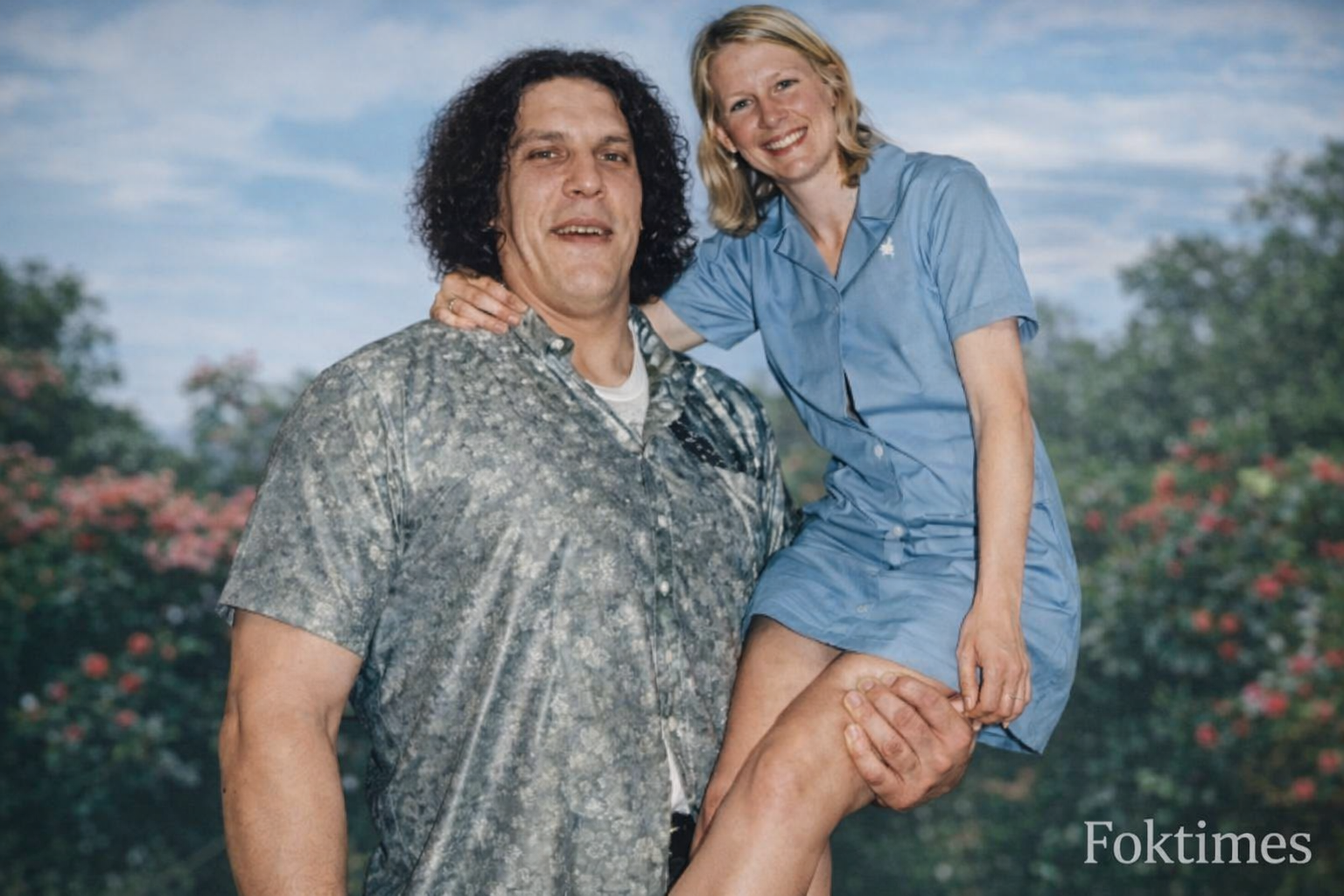
Jean Christensen remains one of the most quietly discussed figures connected to professional wrestling history. While her name frequently appears in searches related to André the Giant, very little has been written about her life in a thoughtful, human way. Too often, she is reduced to a single label — the woman associated with a legend. Yet behind that label was a real person navigating love, motherhood, and privacy in the orbit of global fame.
This biography-style article explores what is publicly known about Jean Christensen, separating fact from speculation and placing her life within the broader cultural context of the wrestling world during the 1970s and 1980s.
Early Life and Background
Public documentation about Jean Christensen’s early years is limited. Unlike celebrities who build careers in front of cameras, Jean did not cultivate a public profile. Most credible references suggest that she worked in the wrestling business during the 1970s, reportedly in public relations. That detail, while modest, is significant. It places her inside the machinery of professional wrestling at a time when the industry was still structured around territorial promotions and relentless touring schedules.
Working in public relations within wrestling required resilience and adaptability. The industry was fast-moving, personality-driven, and heavily male-dominated. Women in the business often worked behind the scenes, managing communications, logistics, and media relations. If Jean did serve in this capacity, she would have been deeply familiar with how wrestling narratives were crafted and protected.
That context matters when considering the privacy she later maintained.
Meeting André the Giant
Jean Christensen’s name became permanently linked to André René Roussimoff, globally known as André the Giant. André was not just a wrestler; he was a phenomenon. Standing over seven feet tall and weighing more than 500 pounds at various points in his career, he was marketed as “The Eighth Wonder of the World.” His presence drew enormous crowds, and his mystique became central to professional wrestling’s golden era.
It is widely reported that Jean met André through the wrestling circuit. Their relationship developed during a period when André’s career was reaching major heights. However, details of their romance remain largely private. Some sources refer to Jean as André’s partner, while others have inaccurately labeled her as his wife. The historical record does not clearly confirm a formal marriage, and careful biographical writing requires acknowledging that ambiguity.
What is certain is that their relationship resulted in the birth of a daughter.
Motherhood and Robin Christensen-Roussimoff
Jean Christensen is best documented as the mother of Robin Christensen-Roussimoff, André the Giant’s only child. Robin was born in 1979 during a time when André’s professional commitments required constant travel across the United States and internationally.
Raising a child connected to a global sports figure is never simple. In this case, the circumstances were particularly complex. André’s demanding schedule and larger-than-life public image created emotional and logistical challenges. Reports indicate that Robin saw her father only a limited number of times during her childhood.
For Jean, motherhood likely required extraordinary steadiness. She was raising a daughter whose father was both famous and physically distant. Balancing protection, explanation, and reality would not have been easy. Children of celebrities often grow up surrounded by myths about their parents. In Robin’s case, the myths were especially dramatic.
The task of grounding that narrative would have fallen largely to Jean.
Legal Recognition and Public Scrutiny
At one point, paternity confirmation became part of the public record. Court-ordered testing ultimately confirmed that André was Robin’s father, and child support arrangements followed. While such matters are deeply personal, they entered public awareness because of André’s fame.
For Jean, this period likely marked the most visible chapter of her life. Legal proceedings tied to a high-profile figure can bring unwanted attention. Yet even during that time, she did not transform into a public personality. She did not give headline interviews or attempt to capitalize on proximity to fame.
Instead, she remained largely outside the spotlight.
Life Away from the Cameras
One of the most defining aspects of Jean Christensen’s biography is her privacy. In an industry built on spectacle, she chose discretion. That decision becomes even more notable when viewed through a modern lens, where family members of celebrities often build public platforms of their own.
Jean did not pursue that route. There is no extensive media archive of interviews, public statements, or promotional appearances. Her legacy exists primarily through documented family history and her daughter’s later reflections.
Privacy, however, should not be mistaken for insignificance. In many ways, maintaining stability away from cameras may have been her most meaningful contribution.
André the Giant’s Legacy and Its Impact
André the Giant’s influence on wrestling and pop culture is immense. He headlined major events, including WrestleMania III in 1987, where he faced Hulk Hogan in one of the most iconic matches in sports entertainment history. Beyond wrestling, he gained mainstream recognition through his role in the 1987 film The Princess Bride.
Such fame creates a gravitational pull. Everyone connected to the star becomes part of the narrative. For Jean, this meant her identity was frequently reduced to association. Yet her lived experience would have included the ordinary rhythms of work, parenting, and personal responsibility — realities that rarely make headlines.
It is important to remember that celebrity mythology often simplifies complex human relationships. André was celebrated publicly, but privately he struggled with health complications related to acromegaly, the condition responsible for his extraordinary size. Managing those realities within a relationship would have required emotional strength and adaptability.
Jean’s role in that chapter of his life deserves acknowledgment, even if many details remain unrecorded.
Robin’s Adult Perspective
In adulthood, Robin Christensen-Roussimoff has occasionally spoken about her father in interviews and documentary appearances. Her reflections often portray André as both larger-than-life and deeply human. That balanced perspective suggests careful upbringing.
Children do not arrive at nuance on their own. It is shaped by conversations, context, and the tone set at home. Jean’s influence likely played a critical role in how Robin understands and represents her father’s legacy today.
Robin has maintained a relatively private life, occasionally participating in wrestling-related events but never fully entering the industry as a permanent public figure. That measured distance reflects a continuation of the privacy Jean seemed to value.
A Woman Defined by Strength, Not Spotlight
Biography writing often gravitates toward dramatic arcs. Jean Christensen’s life does not fit neatly into spectacle. Instead, it reflects quiet resilience.
She navigated a relationship with one of the most recognizable athletes of his era. She raised a daughter connected to that legacy. She endured legal scrutiny without courting publicity. And she did so largely outside the cultural machine that tends to amplify or distort personal stories.
In a world increasingly obsessed with visibility, her discretion stands out.
Final Years and Passing
Jean Christensen passed away in 2008. By that time, André the Giant had already been gone for more than a decade, having died in 1993. The years between their respective deaths saw the growth of the internet and a renewed fascination with wrestling history.
As documentaries and biographies revisited André’s life, Jean’s name resurfaced periodically. Yet even then, she remained more reference point than headline. Her story continues to be told indirectly, often through discussions of Robin or André’s broader biography.
Conclusion
Jean Christensen’s life cannot be measured by media appearances or celebrity branding. It is defined instead by steadiness, privacy, and motherhood within extraordinary circumstances.
She occupied a unique position in wrestling history — not as a performer or promoter, but as a woman whose personal life intersected with global fame. While the public record offers limited details, what emerges is a portrait of quiet strength.
In the end, Jean Christensen represents something rare in modern celebrity culture: a life lived largely outside the spotlight, even when the spotlight hovered close. Her story reminds us that behind every legend are individuals whose contributions are less visible but equally human.