
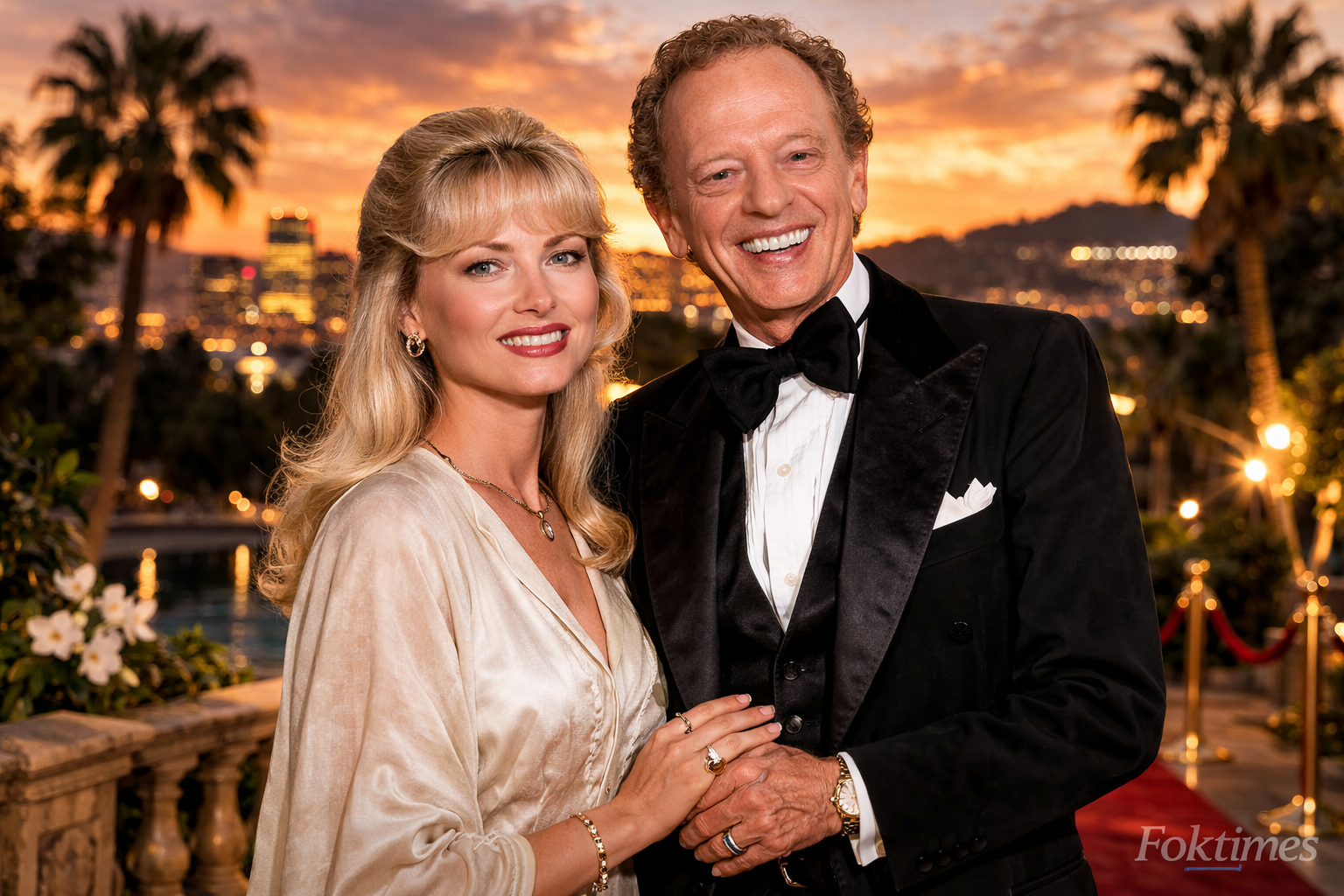
In the vast world of Hollywood history, some names shine brightly under studio lights, while others remain softly illuminated in the background. Loralee Czuchna belongs to the latter group. Though she is not a public celebrity in her own right, her name continues to surface in online searches because of her connection to beloved American actor Don Knotts. Yet beyond that association, much about her life remains private.
This biography-style article explores what is publicly known about Loralee Czuchna, places her story within the cultural context of classic American television, and reflects on the broader meaning of privacy in a fame-driven era.
Early Life and Background
Public information about Loralee Czuchna’s early life is limited. Unlike many figures connected to Hollywood, she did not build a career in film, television, or entertainment that would naturally generate press coverage. As a result, verified details about her childhood, education, and family background are not widely documented in major media archives.
This absence of information has led to speculation across various websites. However, reliable biographical writing depends on confirmed facts rather than repetition. What can be said with confidence is that Loralee Czuchna entered public awareness primarily through her marriage to Don Knotts during a significant period in his career.
Her relatively low public profile suggests she lived much of her life outside the spotlight, even during her years connected to a well-known entertainer. In an industry where visibility often becomes permanent, that level of privacy stands out.
Marriage to Don Knotts
Loralee Czuchna became widely known when she married Don Knotts in 1974. At the time, Knotts was already a familiar face to American audiences. He had gained national fame for his role as Deputy Barney Fife on “The Andy Griffith Show,” a character that earned him multiple Emmy Awards and secured his place in television history.
Their marriage lasted until 1983. During those years, Knotts continued to work in television and film, appearing in projects that kept him active in the entertainment industry. While public appearances and industry events occasionally placed them in the same social circles as other performers, Loralee Czuchna herself did not cultivate a public persona.
The relationship occurred during a transitional era in Knotts’s life. After leaving “The Andy Griffith Show,” he explored film roles and later found renewed popularity on “Three’s Company.” The period between the mid-1970s and early 1980s marked both professional shifts and personal adjustments. Within that timeline, Loralee Czuchna was part of his personal journey.
However, the reasons behind their eventual divorce in 1983 have never been extensively detailed in mainstream reporting. Like many couples, especially those connected to public figures, the separation appears to have been handled without public spectacle. That discretion has contributed to the limited archival footprint surrounding her name.
Life Outside the Spotlight
One of the most defining aspects of Loralee Czuchna’s biography is the choice—or perhaps the circumstance—of privacy. Unlike spouses who leverage a famous partner’s recognition into media careers, interviews, or memoirs, she remained largely out of public discussion.
This distinction is important. The 1970s and 1980s were not yet the era of social media or continuous celebrity coverage. News cycles were slower, and private individuals could more easily separate themselves from the professional identities of their partners. In many ways, Loralee Czuchna represents a quieter chapter in Hollywood’s social history, when personal lives were not yet permanently archived online.
Even after her divorce from Don Knotts, she did not step into media interviews or attempt to reshape her identity around that chapter. The absence of controversy or public narrative suggests a deliberate preference for a life removed from publicity.
Don Knotts and the Cultural Context
To understand why Loralee Czuchna’s name continues to appear in searches, it helps to appreciate the cultural impact of Don Knotts. Knotts was more than a supporting actor. His portrayal of Barney Fife on “The Andy Griffith Show” became one of the most recognizable comedic performances in American television. His nervous energy, expressive face, and impeccable timing created a character that remains iconic decades later.
He later appeared in successful family films and television projects, including “The Ghost and Mr. Chicken” and “Three’s Company.” His career spanned generations, and his work continues to air in reruns and streaming libraries. As a result, audiences who rediscover his performances often grow curious about his personal life.
In that curiosity, Loralee Czuchna’s name naturally emerges. Yet her own story remains separate from the performance-driven narrative of Hollywood. She did not become a recurring figure in entertainment journalism. Instead, she occupies a brief but meaningful space within the broader biography of a celebrated actor.
The Challenge of Modern Biography
Writing about Loralee Czuchna presents a broader challenge common in contemporary digital culture. The internet encourages constant information sharing, yet not every life is documented in equal measure. When a person maintains privacy, writers must resist the temptation to fill gaps with assumption.
Responsible biography depends on balance. It acknowledges public records while respecting the limits of available information. In Loralee Czuchna’s case, the confirmed timeline of her marriage to Don Knotts forms the core of what is publicly verifiable. Beyond that, careful restraint preserves credibility.
This approach may feel unusual in an era where readers expect exhaustive detail. However, restraint can also reflect integrity. A biography does not require embellishment to hold meaning. Sometimes the most honest portrait is one that openly states where the record ends.
Personal Privacy in a Fame-Oriented World
The continued interest in Loralee Czuchna also reflects a cultural shift. Today, celebrity spouses often become influencers, entrepreneurs, or media personalities. Public identity frequently expands beyond the initial connection to fame. In contrast, Loralee Czuchna’s story feels rooted in a different era.
Her limited public footprint suggests that she lived largely as a private citizen, even during her marriage to a well-known actor. That distinction reminds readers that not everyone associated with Hollywood seeks public recognition. Some lives intersect briefly with fame before returning to ordinary rhythms.
In many respects, that quiet trajectory may be the defining feature of her biography. Rather than being defined by scandal or spectacle, her public presence is measured and contained.
Legacy Through Association
Although Loralee Czuchna did not build an independent entertainment legacy, her name remains linked to a figure whose work shaped American comedy. Don Knotts’s legacy continues through reruns, streaming platforms, and television history retrospectives. As long as his work remains culturally relevant, associated names will also circulate.
Yet it is important to separate association from identity. Loralee Czuchna’s life should not be reduced solely to her role as a spouse. While public records highlight that chapter, the rest of her life likely unfolded in ways not captured by entertainment journalism.
That separation between public documentation and private reality underscores a broader truth: not every story needs full public visibility to hold value.
Conclusion
Loralee Czuchna’s biography is defined as much by what remains private as by what is publicly known. Her marriage to Don Knotts from 1974 to 1983 places her within a meaningful period of television history, yet her own life appears to have remained largely outside the spotlight.
In an age of digital permanence, her story offers a quiet counterpoint to modern celebrity culture. It demonstrates that proximity to fame does not automatically erase personal boundaries. While audiences continue to search her name out of curiosity tied to Don Knotts’s enduring legacy, the documented facts remain concise.
Ultimately, Loralee Czuchna represents a reminder that biography is not always about spectacle. Sometimes it is about acknowledging a chapter in history while respecting the spaces that remain personal. Her life, as far as public records show, reflects discretion, privacy, and a connection to one of television’s most beloved comedians — a connection that continues to spark interest even decades later.