
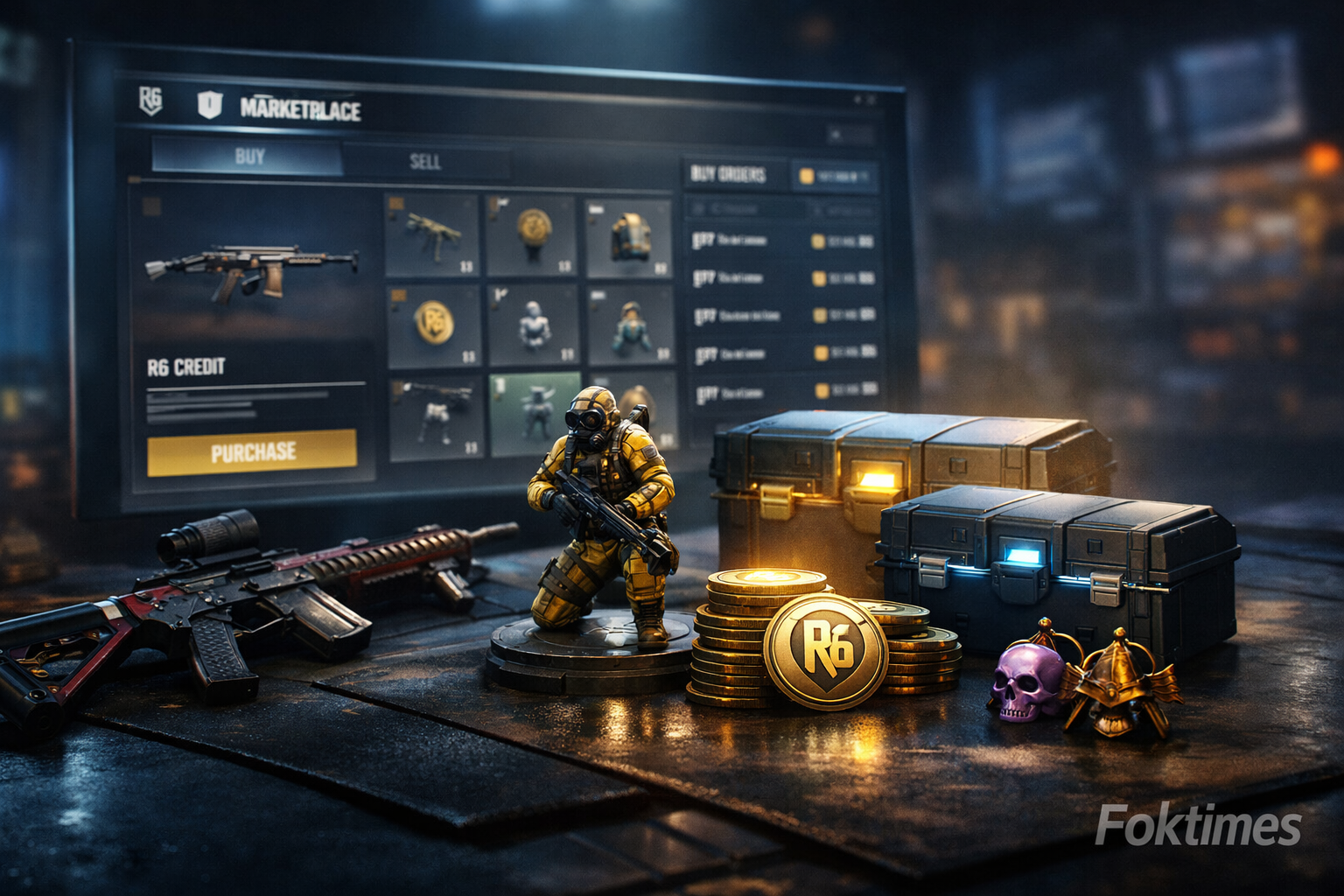
Rainbow Six Siege has grown from a tactical shooter into one of the longest‑running live service games in modern gaming. Over the years the game introduced hundreds of cosmetic items including weapon skins, charms, uniforms, and seasonal collectibles. Many of these items became rare because they were tied to past events or early seasons. For years, players had no official way to trade or acquire these cosmetics once they disappeared from the store.
The R6 Marketplace changed that situation. Ubisoft introduced the marketplace to allow players to buy and sell eligible cosmetic items using the game’s premium currency. This feature created a controlled player‑driven economy inside the Rainbow Six Siege ecosystem. Instead of items sitting unused in player inventories, they can now circulate between players who value them more.
Today the R6 Marketplace is one of the most discussed systems in the Siege community. Players use it to hunt for rare skins, recover value from unused items, and explore the game’s cosmetic history. Understanding how it works can help players use the system effectively while avoiding confusion.
What the R6 Marketplace Is
The R6 Marketplace is Ubisoft’s official trading platform for Rainbow Six Siege cosmetic items. It allows players to list eligible items from their inventory and sell them to other players using R6 Credits. Buyers can also place purchase orders to obtain specific cosmetics they want.
Unlike unofficial trading sites that existed in the past, the marketplace operates directly inside Ubisoft’s ecosystem. Transactions are handled through Ubisoft accounts and in‑game inventory systems. This design helps reduce scams and protects players from unsafe third‑party trading platforms.
The marketplace focuses only on cosmetic items. Players cannot trade operators, gameplay advantages, or anything that would affect competitive balance. Everything traded through the system remains purely visual.
Why Ubisoft Created the R6 Marketplace
After nearly a decade of updates, Rainbow Six Siege accumulated a massive collection of cosmetics. Many of these items were only available during limited time events or specific seasons. Once those events ended, the items disappeared from official stores.
This created frustration for new players who joined the game later. They saw rare skins used by veteran players but had no legitimate way to obtain them.
The R6 Marketplace solves this issue by letting players exchange those cosmetics among themselves. Instead of permanently disappearing, older items can re‑enter circulation through player listings. This keeps the cosmetic economy active even years after an item was first released.
From Ubisoft’s perspective, the system also strengthens the game’s long‑term economy. Players who sell items receive R6 Credits, which can later be spent on battle passes, bundles, or new cosmetics. This keeps the premium currency flowing inside the game ecosystem.
Who Can Access the R6 Marketplace
Ubisoft did not make the marketplace open to every account immediately. To use the system, players must meet certain requirements that help protect the platform from abuse.
Players must reach at least level 25 in Rainbow Six Siege. This requirement ensures that users have spent time playing the game before gaining access to the trading system. Ubisoft also requires players to enable two‑step verification on their Ubisoft account for additional security.
Accounts must also be in good standing. If an account has sanctions or penalties related to cheating or misconduct, marketplace access may be restricted. These requirements help keep the marketplace trustworthy and reduce the risk of fraudulent activity.
How Buying Items Works
Buying items through the R6 Marketplace is designed to be straightforward but structured. Players search for the cosmetic they want and then place a purchase order. In the order they specify the maximum amount of R6 Credits they are willing to pay.
If a seller lists the same item at that price or lower, the transaction happens automatically. The item is transferred into the buyer’s inventory and the seller receives the credits.
If no matching listing exists yet, the purchase order remains active. When a seller eventually posts the item at a compatible price, the marketplace completes the transaction. This system allows players to set their desired price instead of constantly checking listings.
How Selling Items Works
Selling items on the R6 Marketplace begins with selecting a tradable cosmetic from the player’s inventory. The player chooses a selling price in R6 Credits and creates a listing.
Once listed, the item becomes available to other players browsing the marketplace. If a buyer places an order matching that price, the marketplace completes the transaction automatically.
After the sale finishes, the seller receives R6 Credits in their account balance. Those credits can be used in the official Siege store or to purchase other items from the marketplace.
This system turns unused cosmetics into valuable assets for players who want different items or future content.
The Role of R6 Credits in the Marketplace
All marketplace transactions use R6 Credits rather than real‑world currency. R6 Credits are the premium currency already used throughout the Rainbow Six Siege store.
Players can purchase credit packs through official storefronts. They can then use those credits to buy skins, battle passes, or marketplace items.
Using credits instead of real money helps Ubisoft maintain control over the economy. It also prevents the marketplace from turning into a real‑money trading system that could create regulatory and security challenges.
How the Marketplace Changes Player Behavior
The introduction of the R6 Marketplace significantly changed how players view cosmetic items.
Before the marketplace existed, many players accumulated large inventories filled with items they never used. Those items had sentimental value but little practical use.
Now those cosmetics can be sold to other players who want them. This creates a sense of value around older items that previously sat idle.
Collectors also benefit from the system. Instead of waiting for Ubisoft to re‑release rare skins, they can search the marketplace for listings from other players.
This shift encourages players to engage more deeply with the cosmetic side of Rainbow Six Siege.
The Impact on the Rainbow Six Siege Economy
The marketplace plays an important role in the broader Siege ecosystem. It connects players, cosmetics, and premium currency into a single system.
When players sell items, they receive credits that can later be spent on new content. When players buy items, they create demand for rare cosmetics. This constant exchange keeps the in‑game economy active.
The system also extends the lifespan of older content. Instead of fading away, cosmetics from past seasons continue to circulate through player inventories.
For a live service game that has been running for many years, this type of economic loop helps maintain long‑term engagement.
Security and Marketplace Safety
Because the R6 Marketplace operates through official Ubisoft accounts, it provides a much safer trading environment compared to unofficial platforms.
Two‑step verification, account requirements, and controlled transactions reduce many common risks associated with online item trading.
Players no longer need to trust unknown traders or external websites. The entire process happens within Ubisoft’s infrastructure.
This approach helps protect both buyers and sellers while maintaining the integrity of the game’s economy.
The Future of the R6 Marketplace
As Rainbow Six Siege continues to evolve, the marketplace is likely to become even more important. Ubisoft regularly adds new cosmetic content, seasonal events, and collaborations.
Each new release expands the number of items that may eventually appear on the marketplace. Over time the platform could become a central hub for the entire cosmetic history of the game.
For longtime players, this means their collections may retain value for years. For new players, it provides opportunities to obtain items from earlier chapters of the game’s lifespan.
Conclusion
The R6 Marketplace represents a major evolution in how Rainbow Six Siege handles cosmetic items. Instead of letting old skins disappear or sit unused in player inventories, Ubisoft created a structured system where those items can move between players.
By using R6 Credits and integrating the marketplace directly into Ubisoft accounts, the company built a secure and controlled trading environment. Players gain flexibility, collectors gain access to rare cosmetics, and the game’s economy becomes more dynamic.
As Rainbow Six Siege continues its long journey as a live service title, the marketplace will likely remain an essential part of its ecosystem. For players who enjoy collecting cosmetics or customizing their loadouts, understanding the R6 Marketplace can unlock an entirely new layer of the Siege experience.